ABA vs ESDM for a 3-Year-Old: How to Choose the Right Therapy

In short: Both ABA and ESDM are evidence-based therapies for young children with autism. ABA focuses on behavior reduction and skill building through structured trials, while ESDM combines play-based developmental strategies with behavioral principles. Your choice depends on your child's needs, learning style, and family goals. Use a free matching service like ABA Centers Near Me to find vetted BCBA-led providers that offer either approach.
Key takeaways
- ABA and ESDM both use behavioral principles but differ in delivery: ABA often uses discrete trial training; ESDM is play-based and developmentally integrated.
- ESDM is specifically designed for toddlers and preschoolers (ages 12-48 months), emphasizing joint attention and natural social engagement.
- ABA has a broader age range and can be more intensive, targeting a wide range of skills and reducing challenging behaviors.
- Both therapies are often covered by insurance and Medicaid, but coverage details vary by state and plan.
Understanding Your Options: ABA and ESDM
If your 3-year-old has recently received an autism diagnosis, you are likely exploring therapy options. Two of the most well-known evidence-based approaches are Applied Behavior Analysis (ABA) and the Early Start Denver Model (ESDM). While both can be highly effective, they have distinct philosophies, structures, and goals. This article explains the key differences so you can decide which approach-or combination-might best support your child's development.
As a free matching service, ABA Centers Near Me helps families connect with vetted BCBA-led providers who offer a range of therapies. We encourage you to use this comparison as a starting point for conversations with professionals in your community.

🔗 Related reading: Is ABA Therapy Covered by Medicaid in New York? · Find ABA Near Me
What Is ABA Therapy?
Principles and Techniques
ABA therapy applies the science of learning and behavior to increase helpful behaviors and reduce those that interfere with learning or daily life. For a 3-year-old, ABA often involves breaking down skills-such as requesting a toy, following a simple instruction, or making eye contact-into small, teachable steps. Therapists use positive reinforcement to encourage desired behaviors and may use prompting, shaping, and data collection to track progress.
Typical Session for a 3-Year-Old
An ABA session for a young child is often play-based but structured. A registered behavior technician (RBT) works under the supervision of a board-certified behavior analyst (BCBA). Sessions may take place at home, in a clinic, or in a community setting. The therapist presents learning opportunities in a systematic way, often using discrete trial training (DTT) where each skill is practiced multiple times. For example, the therapist might hold up two blocks and ask, "Which one is red?" If the child points correctly, they receive praise or a small reward. Over time, less structured natural environment teaching (NET) is used to generalize skills.
Who Is It For?
ABA is suitable for children from infancy through adulthood. For 3-year-olds, it can address early communication, social interaction, play skills, self-help routines, and reduction of behaviors like tantrums or repetitive actions. ABA can be delivered at different intensities-anywhere from 10 to 40 hours per week depending on need.
What Is ESDM?
Origins and Philosophy
The Early Start Denver Model (ESDM) was developed specifically for toddlers and preschoolers with autism, ages 12 to 48 months. It merges developmental science with ABA principles. The key idea is that learning happens best through natural, interactive play and positive relationships. ESDM focuses on what developmental milestones the child should be reaching next and uses joint activities to teach social communication, imitation, and cognitive skills.
Core Components
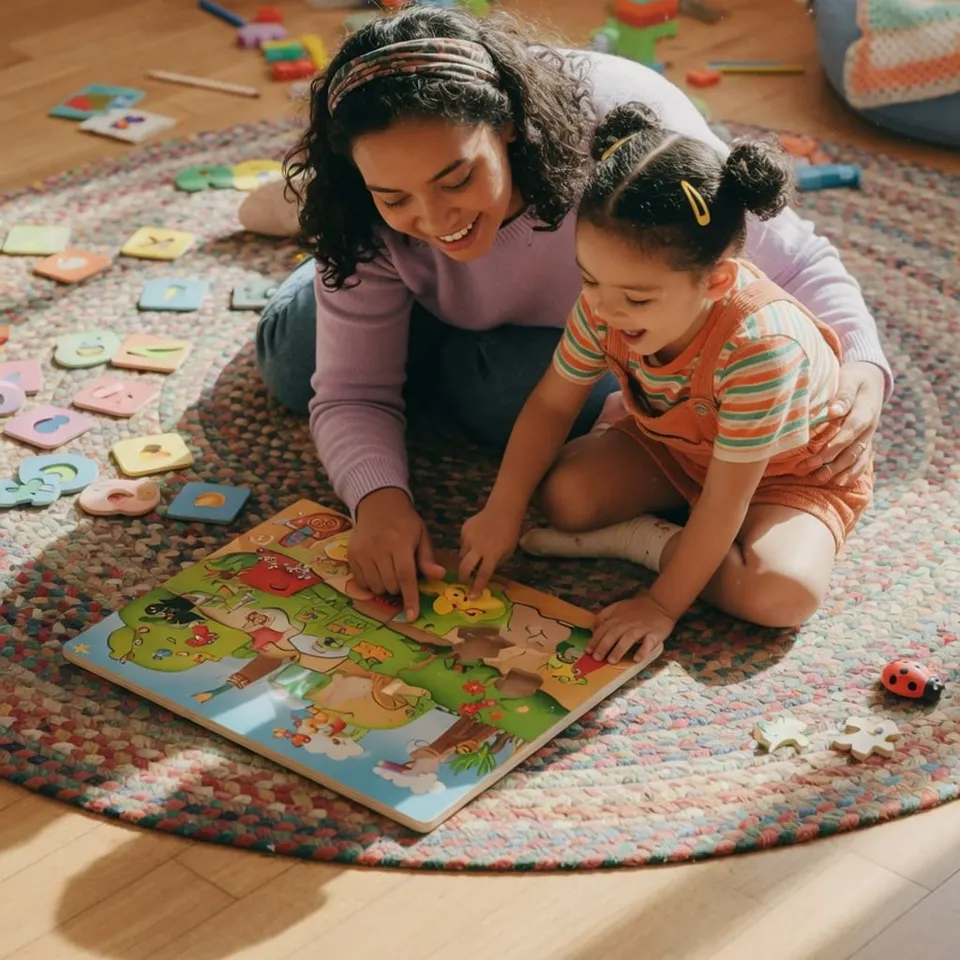
An ESDM session is delivered by a trained therapist or parent who follows the child's lead. The environment is set up with engaging toys and activities to encourage the child to initiate interactions. The therapist embeds teaching trials into the flow of play. For example, while rolling a ball back and forth, the therapist might pause and wait for the child to make eye contact before continuing. This "motivational" approach is designed to build reciprocal social engagement from an early age.
How It Differs from Traditional ABA
While both are based on behavior analysis, ESDM is less structured than traditional ABA. It does not rely on repeated discrete trials in a table-top setting. Instead, learning objectives are woven into joint activities that are meaningful to the child. ESDM also places a strong emphasis on affect-the therapist uses a warm, animated style to keep the child engaged. The parent is considered a key partner, and parent coaching is a major component.
🔗 Related reading: Summer & After-School ABA Programs in California: Costs & Coverage · Find ABA Near Me
Key Differences Between ABA and ESDM for a 3-Year-Old
Age Appropriateness
ESDM is designed exclusively for very young children up to age 4. ABA, on the other hand, works for any age. For a 3-year-old, both can be appropriate, but ESDM may feel more natural if your child thrives on unstructured play and strong emotional connection.
Focus Areas
ESDM prioritizes social-emotional skills, joint attention, and communication. ABA can address those same areas but also targets a wider range of behaviors (e.g., safety skills, academics later on) and can be used to reduce challenging behaviors more directly.
Structure and Intensity
ABA is often delivered with higher intensity (15-40 hours/week) and uses explicit teaching. ESDM is typically lower intensity (10-20 hours/week) and uses incidental teaching. Some families prefer the clarity of ABA's data-driven approach; others find ESDM's playfulness less stressful for the child.
Parent Involvement
Both therapies involve parents, but ESDM places even more emphasis on coaching parents to carry over strategies throughout the day. ABA also includes parent training, but the therapist usually takes the lead during sessions.
Evidence Base
Both are supported by research. ABA has decades of studies showing effectiveness for many outcomes. ESDM has strong evidence from randomized controlled trials, especially in improving IQ, language, and adaptive behavior in toddlers. The choice may come down to which approach fits your family's values and your child's learning style.
How to Choose Between ABA and ESDM
Consider Your Child's Profile
Every child is unique. A child who is highly motivated by social praise and enjoys interactive play may do well with ESDM. A child who needs more repetition to learn new skills or who has significant challenging behaviors might benefit from a structured ABA program. Some providers offer a blended model that includes elements of both.
Assess Family Resources
Think about your family's schedule, ability to commit to high-intensity therapy, and desire for parent coaching. If you want to be deeply involved daily, ESDM's parent-driven model may work well. If you need more professional-led support, a comprehensive ABA program could be the right fit.
Availability and Provider Expertise
Not every BCBA is trained in ESDM. When searching for a provider, ask directly about their experience. A free matching service like ABA Centers Near Me can help you find therapists in your area who offer either ABA or ESDM, saving you time and effort.

Insurance and Cost Considerations
Both ABA and ESDM are often covered by private insurance and Medicaid (known as EPSDT for children). However, specific coverage varies by state and plan. For example, some states mandate coverage for ABA but not specifically for ESDM, though ESDM may still be covered if it is provided by a BCBA. Always verify with your insurance company. Your provider's billing team can also help determine benefits. If cost is a concern, using a free matching service can help you find options that accept your insurance, potentially avoiding out-of-pocket expenses.
Getting Started: Finding the Right Provider
Once you have a sense of which therapy aligns with your child's needs, the next step is to find a qualified provider. Look for:
- Credentials: Ensure the team includes a BCBA or a licensed psychologist trained in the specific model.
- Experience with 3-year-olds: Early intervention requires specialized knowledge of toddler development.
- Parent involvement opportunities: Ask how you will be trained and supported.
- Insurance compatibility: Check if they take your plan or can help with prior authorizations.
A free service like ABA Centers Near Me can streamline your search by connecting you with vetted providers who understand both ABA and ESDM. They can match you with therapists who offer the approach you prefer, or who can recommend a customized plan based on an initial assessment.
Conclusion
Choosing between ABA and ESDM for your 3-year-old does not have to be overwhelming. Both therapies are effective, and many children benefit from a combination of structured teaching and naturalistic play. The most important factor is finding a provider who understands your child's unique strengths and challenges, and who works in partnership with your family. Start by gathering information, asking questions, and using a free matching service to explore options. With the right support, your child can make meaningful progress toward their developmental goals.