Lining Up Toys in Autism: Understanding the Behavior and How ABA Therapy Can Help
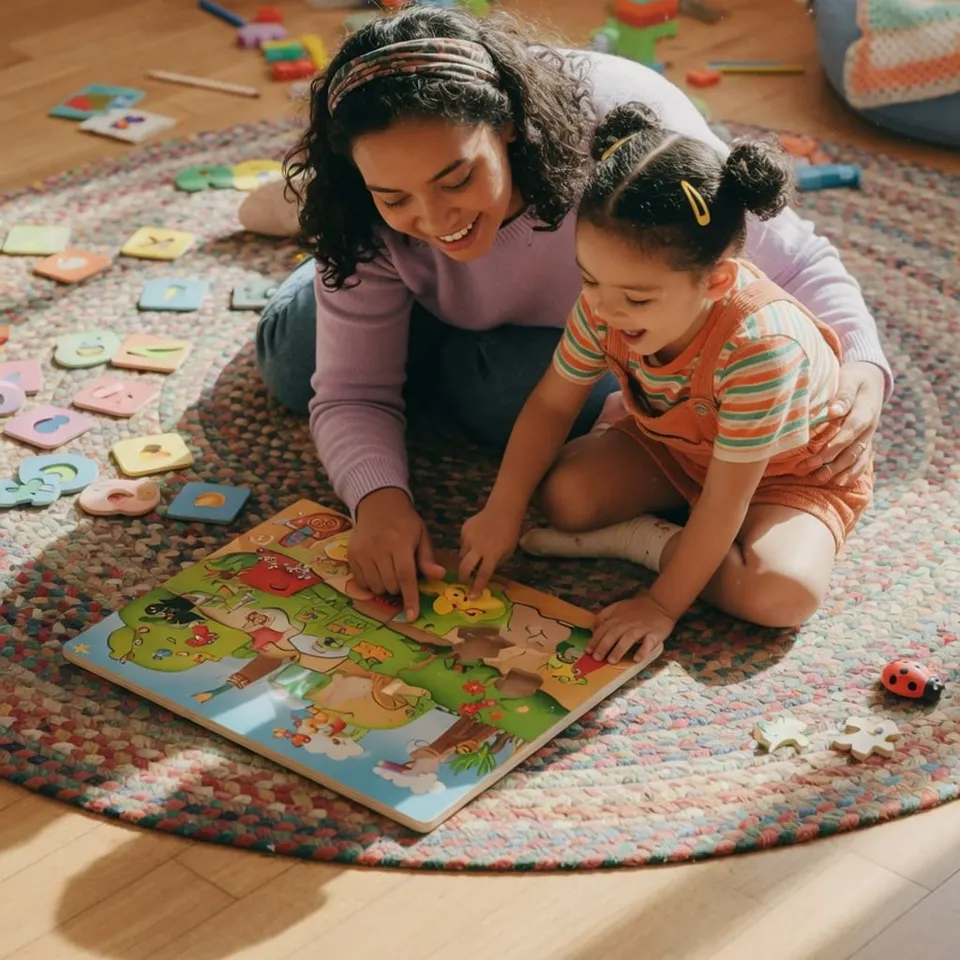
In short: Many autistic children line up toys as a way to create order, sensory regulation, or predictability. ABA therapy uses a functional assessment to understand the purpose of this behavior and then gently expands play skills, flexibility, and social engagement while honoring the child's preference. The goal is not to eliminate lining up but to teach new, meaningful skills alongside it. ABA services are often covered by insurance and Medicaid, and a free matching service like ABA Centers Near Me can help families find vetted, BCBA-led providers.
Key takeaways
- Lining up toys is a common autistic behavior that often provides comfort, sensory regulation, or a sense of order.
- ABA therapy uses a functional assessment to understand why a child lines up toys and what purpose it serves for them.
- Effective ABA goals focus on increasing flexibility and joining the child's play, not on stopping the behavior.
- Parents can gently expand toy interactions by modeling imaginative play alongside the child and making small, tolerable changes.
What Does It Mean When an Autistic Child Lines Up Toys?
If you've ever watched an autistic child carefully arrange toy cars, blocks, or figures in a straight line, you've seen a behavior that is both common and often misunderstood. Lining up toys is a classic example of what professionals call 'restricted and repetitive behaviors' (RRBs), one of the core diagnostic criteria for autism spectrum disorder. But behind this simple action lies a world of meaning-sensory regulation, a need for predictability, or even a form of play that feels just right.
As a parent, you may wonder whether this behavior is something to worry about, or whether you should try to stop it. The answer is nuanced: lining up toys is not inherently harmful, and for many autistic children it provides comfort and joy. However, when it becomes the only way a child engages with their environment or interferes with learning, social connection, or daily routines, it may be worth exploring how to gently expand their play repertoire. That's where ABA therapy-led by a Board Certified Behavior Analyst (BCBA)-can offer thoughtful, individualized support.
This article will walk you through the reasons behind toy lining, how ABA therapy approaches it, practical steps for parents, and how you can find quality, vetted providers through a free matching service like ABA Centers Near Me.
🔗 Related reading: ABA Therapy Cost in New York: A Complete Guide · Find ABA Near Me
Why Do Autistic Children Line Up Toys?
Sensory and Emotional Regulation
For many autistic children, the world can feel overwhelming. Lights, sounds, textures, and social demands can create sensory overload. Lining up toys offers a predictable, controllable activity that helps the nervous system settle. The repetitive motion and visual order can be deeply calming, similar to how some people find comfort in tapping or rocking.
Predictability and Order
Autistic children often thrive on routine and sameness. Lining up toys creates a miniature world of order where everything has its place. This can be especially appealing in a world that feels chaotic or unpredictable. The child knows exactly how the line should look, and maintaining it gives a sense of mastery and control.
Special Interests and Focus
What may look like repetitive behavior can actually be a focused, systematic exploration. A child lining up toy trains might be sorting by color, size, or type. This is a form of logical thinking and categorization-skills that can later be channeled into academics or hobbies. ABA therapists often refer to these strong interests as 'special interests' and use them as powerful teaching tools.
Is Lining Up Toys a Problem That Needs Intervention?
This is a common concern for parents, and the answer depends entirely on context. Lining up toys is not a problem behavior in itself. Many neurotypical children also line up toys from time to time. The difference in autism is often the intensity, duration, and difficulty being redirected to other activities.
A BCBA will conduct a functional behavior assessment (FBA) to understand the purpose the behavior serves for your child. Possible functions include:
- Sensory stimulation - the visual and tactile feedback feels good.
- Self-regulation - calming anxiety or overstimulation.
- Escape or avoidance - a way to withdraw from demanding social situations.
- Access to preferred items - the toys themselves are highly motivating.
Only when the behavior significantly interferes with learning, social relationships, safety, or daily living skills might a BCBA suggest targeted goals. Even then, the approach is always to add new skills without removing what the child loves.

🔗 Related reading: ABA Therapy Access: Rural vs. Urban New York · Nearby ABA Therapy
How ABA Therapy Approaches Lining Up Toys
Joining the Child's Play
ABA therapy is not about force or punishment. A compassionate BCBA begins by building rapport and joining the child in their activity. Sitting alongside a child who is lining up cars, the therapist might narrate, hand the child another car to add to the line, or gently find a way to expand the interaction-perhaps by creating a second line or making the line into a 'parking lot' where cars can drive in and out.
Teaching Flexibility Through Small Changes
The goal is to increase behavioral flexibility without causing distress. A therapist might introduce one small change, like placing a toy slightly out of order, and then immediately reinforce the child's tolerance of that change. Over time, the child learns to accept minor disruptions and even initiate novel play sequences. This can be done using the child's special interest as a reinforcer. For example, after a short social interaction, the child gets to return to their line.
Expanding Play Skills
ABA goals often target play skill development. For a child who only lines up toy animals, the therapist might model hugging two animals together, making animal sounds, or building a simple fence around them. The key is to make the expansion feel like a natural extension of the child's existing play, not an interruption. With repeated, positive experiences, the child begins to incorporate new actions into their play repertoire.
Using the Behavior as a Reinforcer
One of the most effective ABA strategies is to use the lining up activity itself as a reward for engaging in less preferred tasks. For instance, after completing a brief learning activity (like matching colors or following a direction), the child earns a few minutes to line up toys. This builds motivation and cooperation without devaluing the child's special interest.
Practical Tips for Parents at Home
You don't need a therapist to start supporting your child's play flexibility. Here are several evidence-informed strategies you can try:
- Observe first. Notice your child's rules for lining up toys-grouping by color, size, or type? Respect that order before making suggestions.
- Join the line. Sit down and add a single toy to the end of the line, then wait. If your child accepts it, you've opened a small door for interaction.
- Make tiny changes. Gently move one toy a half-inch out of line and see how your child responds. If they're okay, celebrate it. If they're distressed, put it back and try a smaller change next time.
- Model expanded play nearby. Play with a duplicate set of toys in a more imaginative way (e.g., making a car 'drive' or a figure 'talk'). Your child may watch and eventually mimic.
- Set clear limits with compassion. If lining up is interfering with a daily routine (like meal time), let your child know in advance: 'In 5 minutes, we'll put the toys away and have lunch. You can come back to them after.'

Costs, Insurance, and Accessing ABA Therapy
ABA therapy is recognized as an evidence-based treatment for autism and is widely covered by private health insurance and Medicaid under the Early and Periodic Screening, Diagnostic and Treatment (EPSDT) benefit for children. However, navigating insurance, finding a BCBA-led provider, and understanding wait times can be overwhelming.
That's where a free matching service like ABA Centers Near Me (abacentersnearme.com) comes in. We are not a clinic ourselves but a referral service that helps families connect with vetted, qualified ABA therapy providers in your area. Our team works with you to understand your child's needs, insurance coverage, and preferences, then provides a list of options that fit. The service is completely free because providers pay to be listed, so you can focus on getting the care your child deserves.
Keep in mind that many states offer early intervention programs for children under three, and ABA services may be available through your local school district for older children. Your BCBA will help coordinate care with other professionals, such as speech-language pathologists and occupational therapists, if needed.
Common Mistakes to Avoid
When parents first learn about repetitive behaviors like lining up toys, they sometimes make well-intentioned errors. Here's what to watch for:
- Forcing the child to stop. This can cause intense anxiety, meltdowns, and a loss of trust. The behavior serves a purpose, so removing it without a replacement is rarely helpful.
- Mistaking the behavior as a lack of imagination. Many children who line up toys also have rich imaginary play that may look different from neurotypical play. A child lining up dinosaurs might be recreating a 'herd migration' in their mind.
- Overcorrecting too quickly. Flexibility is built gradually. Trying to change too much at once can overwhelm the child and set back progress.
- Not consulting a BCBA when needed. If lining up toys is preventing your child from learning new skills, engaging with peers, or participating in daily routines, professional guidance can make a significant difference. A BCBA can design a tailored plan that honors your child's interests while building important life skills.
When to Seek ABA Support for Lining Up Toys
It's always okay to seek a consultation, even if you're not sure your child 'needs' therapy. Many parents begin ABA because they want to understand their child better and learn strategies to support their development. Consider reaching out to a provider through ABA Centers Near Me if:
- Your child's lining up behavior takes up so much time that they miss opportunities for learning or social interaction.
- Your child becomes highly distressed if the line is disturbed or if they cannot line up items.
- You want to help your child expand play skills but don't know how to start.
- Your child is preparing for a transition (like starting preschool or kindergarten) and could benefit from building flexibility.
- You would like professional help in creating a supportive home environment.
Conclusion: Honoring Your Child's Strengths While Encouraging Growth
Lining up toys is not a problem to be fixed-it's a window into your child's world. By approaching this behavior with curiosity and respect, and by partnering with a skilled BCBA when needed, you can help your child build the flexibility and social engagement that will serve them for a lifetime. ABA therapy, when done with warmth and integrity, does not take away a child's passions. Instead, it uses those passions as the foundation for learning.
If you're considering ABA therapy and want to find a provider who truly understands your child, let ABA Centers Near Me help. Our free, personalized matching service puts you in touch with vetted, BCBA-led clinics in your area. There's no cost to you-just support from people who care. Visit abacentersnearme.com today to learn more and start the journey toward respectful, effective therapy.